RESEARCH GUIDE
What is photonic computing?
Photonic computing uses light to perform selected calculations, often matrix operations. A practical accelerator also needs electronic memory, control, data conversion, and readout. Goldstar Orbital's proposed processor combines those systems and treats performance as something to measure at the complete-workload level.
How does a photonic processor calculate?
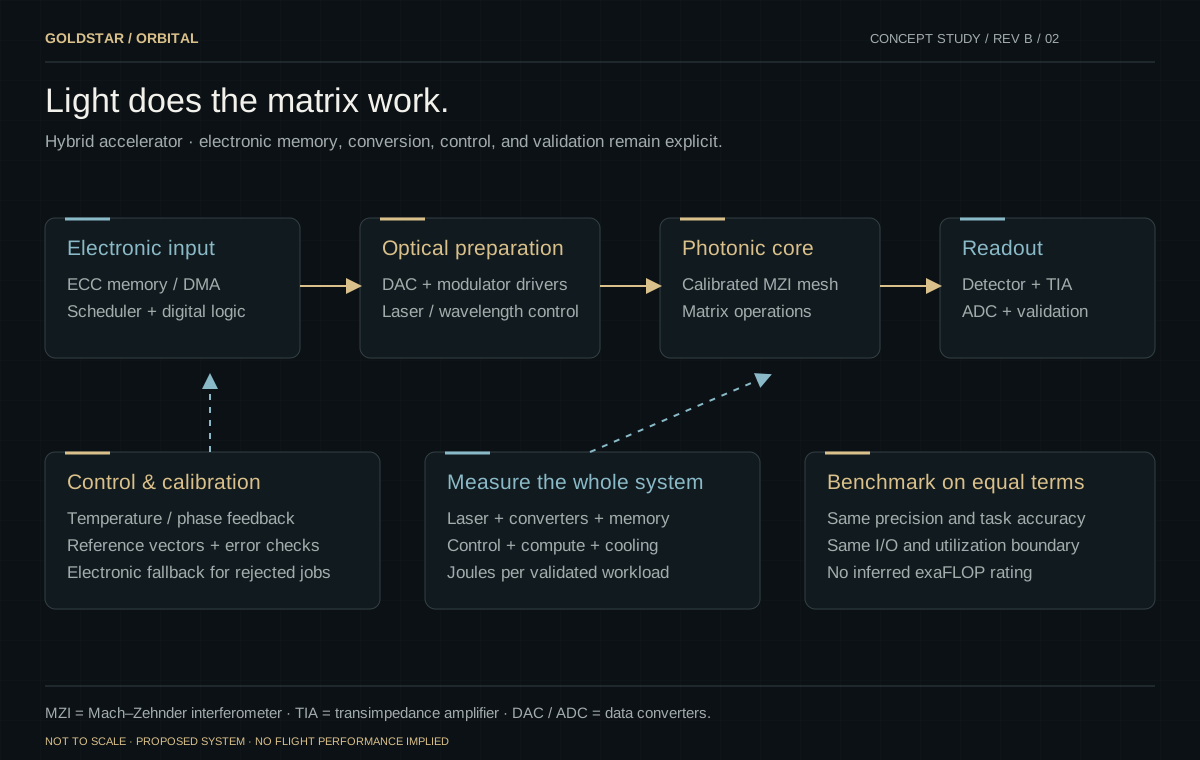
In the proposed Goldstar Orbital pipeline, electronic data is prepared for an optical circuit. Modulators encode inputs into light, a configured optical network combines them, and detectors convert the outputs into electrical signals. Electronic logic then validates and uses the result. This is why the Revision B photonic-core drawing shows an entire signal chain rather than only the illuminated chip.
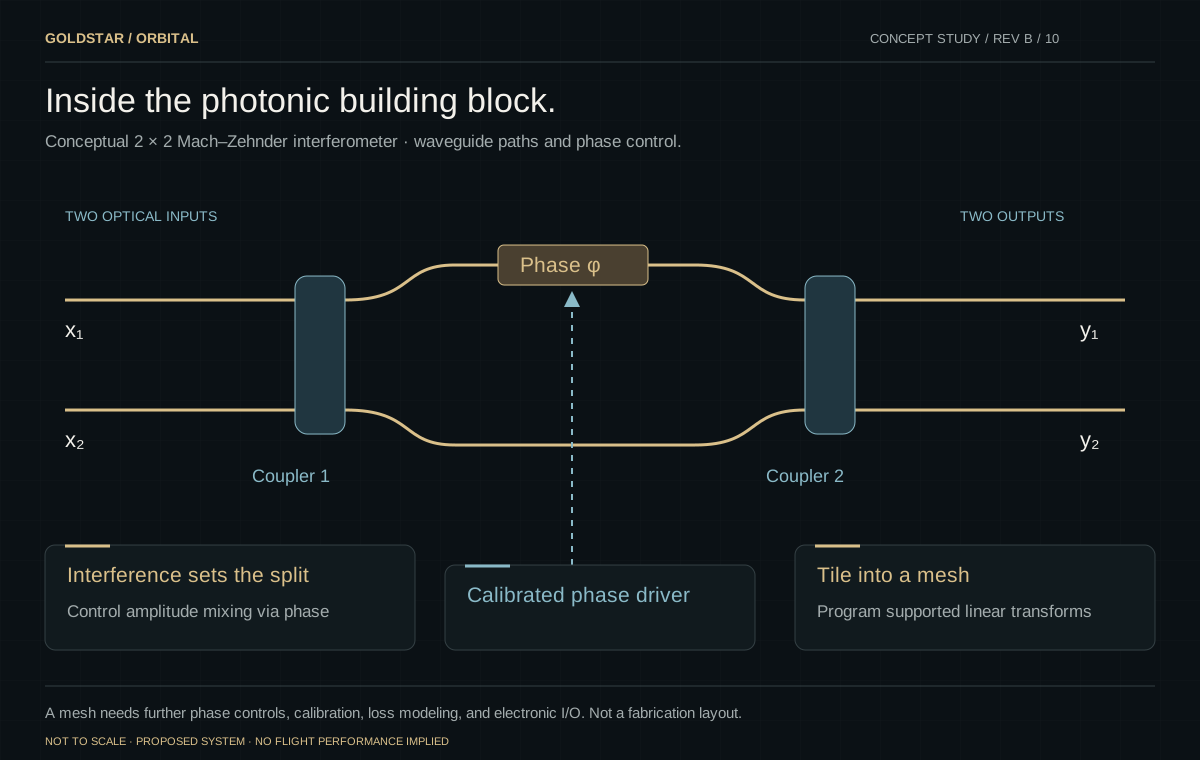
A Mach–Zehnder interferometer splits and recombines light along two paths. Changing the relative phase changes interference at the outputs. A calibrated array of these building blocks, with the additional controls a practical implementation requires, can perform supported linear transformations. The original interferometer schematic illustrates one cell; it is a functional explanation, not a fabrication layout.
Photonic acceleration is workload-specific. A published Nature study of an all-analog photoelectronic chip demonstrates vision tasks and accounts for supporting-system energy. It informs the questions we ask about efficiency; it does not establish the performance of Goldstar Orbital hardware.
How should a photonic GPU be compared with an electronic GPU?
Begin with the same task and acceptance criteria. An answer at lower precision or lower accuracy is not interchangeable with a more accurate result just because it uses less energy. Define the workload, input size, numerical precision, accuracy target, and whether data is already resident in memory before comparing measurements.
| Measure | Include in the test |
|---|---|
| Useful throughput | Completed results that meet the same accuracy requirement, including rejected or repeated work. |
| Energy | Laser, memory, drivers, converters, control, readout, and the thermal support inside the declared test boundary. |
| Latency | Input preparation, movement, computation, conversion, and delivery of a validated result. |
| Stability | Calibration overhead and changes in error across temperature, time, and operating conditions. |
For example, an optical arithmetic element might use little energy while converters or memory dominate a full run. Our revised architecture therefore does not turn a component's energy figure into a system-wide efficiency multiplier. The next useful evidence would be reproducible measurements of the same complete workload on both implementations.
Why does electronic memory remain in the design?
The spacecraft needs durable data, recoverable metadata, and a known response to errors. Revision B assigns those jobs to an active storage service with error correction, scrubbing, authenticated commands, and health monitoring. Optical-memory research can run as a separate experiment without making every stored file depend on an unproven retention claim.
A one-hour coherent optical-storage experiment is relevant evidence for a particular laboratory memory. It does not demonstrate a general-purpose orbital archive with years of retention. The retention time, read fidelity, refresh energy, and environment must be measured for the actual device.
Why did the symbol calculation change from 32 to 26 bits?
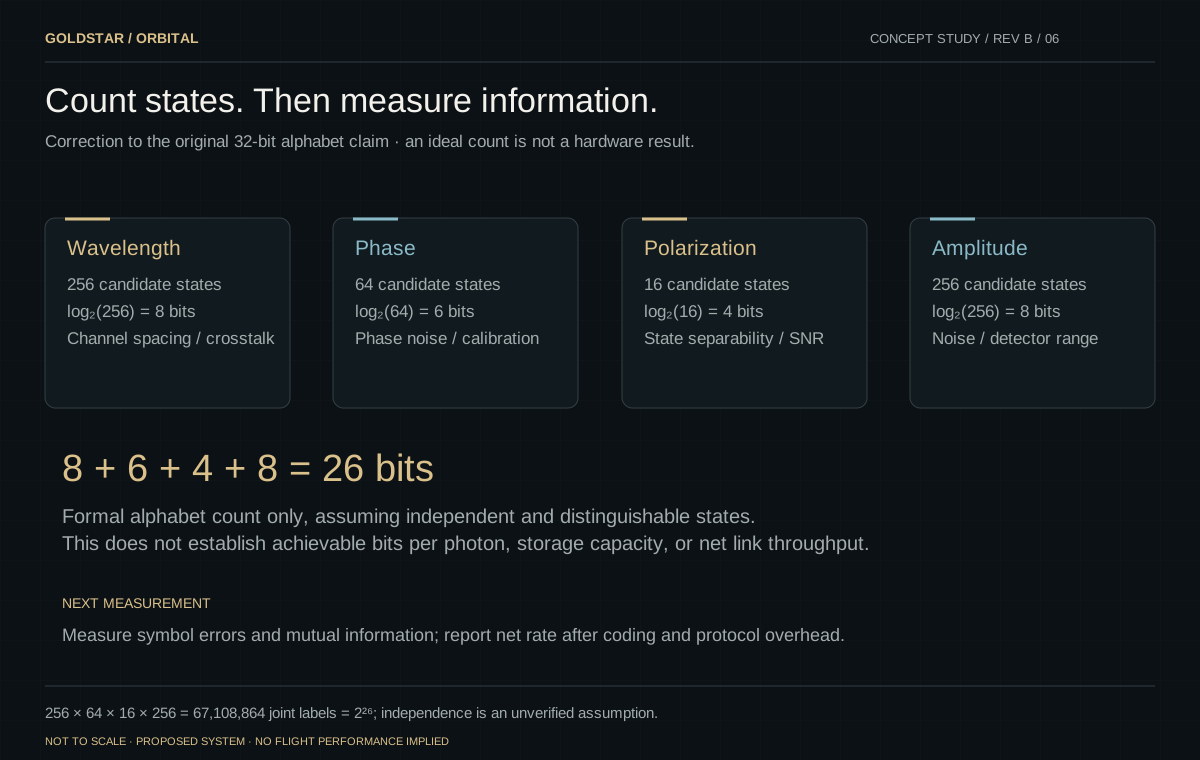
The original drawings listed 256 wavelength states, 64 phase states, 16 polarization states, and 256 amplitude states. If all four choices were independent and distinguishable, the number of joint labels would be 256 × 64 × 16 × 256 = 226. That is 26 ideal label bits: 8 + 6 + 4 + 8.
This arithmetic does not establish bits per photon or usable memory capacity. Noise and dependencies between dimensions can reduce the recoverable information. The revised encoding drawing makes that assumption visible so a future experiment can test it, rather than treating a label count as a hardware result.
What changes when the processor moves into space?
A spacecraft adds requirements for power, heat rejection, radiation tolerance, pointing, and recovery. Optical computation does not remove these responsibilities. Continue with the orbital infrastructure guide for the supporting systems, or inspect the full concept architecture.
Questions answered
Is a photonic processor the same as a quantum computer?
No. The proposed processor uses classical optical interference. Quantum information storage is a separate research topic and is not required for the baseline accelerator.
Does a photonic GPU replace every electronic operation?
No. The proposed optical core handles supported matrix operations. Scheduling, memory, validation, and other operations remain electronic.
Has Goldstar Orbital demonstrated the claimed spacecraft performance?
The published Revision B architecture is a concept study. It does not report flight qualification, a measured exaFLOP rating, or a validated system-wide efficiency multiplier.